
ArenaGear University · Coaching
7 Timing Mistakes That Quietly Cost Coaches Accurate Data
Bad times don't look bad. They look like progress that isn't real, or plateaus that aren't there. Here are the mistakes we see most.
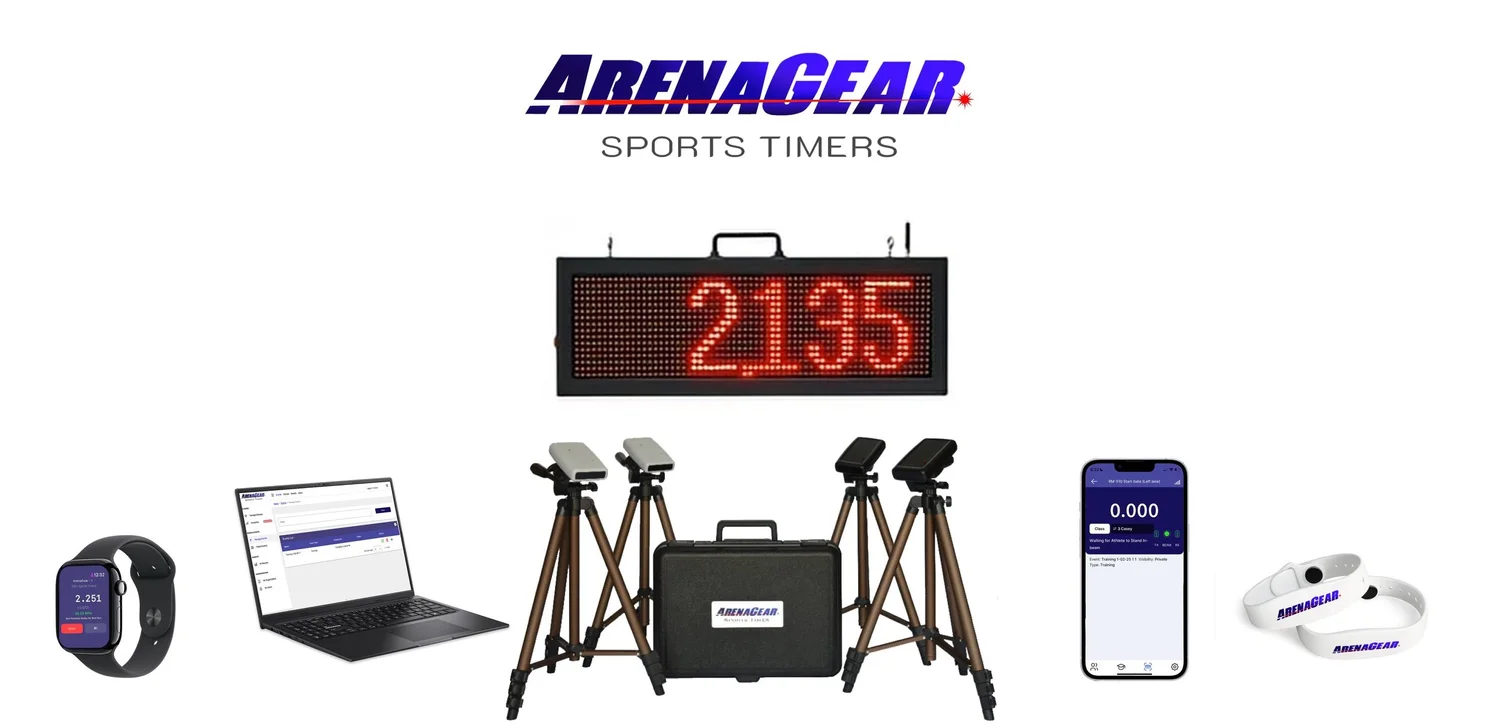
1. Trusting the stopwatch
Hand timing depends on the timer's reactions at both ends of the run. It typically reads faster than electronic timing and varies from timer to timer. If you're comparing athletes or tracking progress, you need the same electronic measurement every time. How to time a 40 accurately.
2. Mounting the beam too low
Ground-level beams trigger off a foot or shin, which changes with every stride. A waist-height beam triggers near the athlete's center of mass, so the same run produces the same number.
3. Changing the setup between sessions
Different start methods, different distances or a different gate height make week-to-week comparisons meaningless. Write down the setup and repeat it exactly. Self-aligning gates remove one more variable.
4. Recording only the best rep
A best time tells you ceiling; all the reps tell you consistency. TEAMS stores every rep automatically and shows lifetime records, consistency and trends.
5. Losing data between the field and the spreadsheet
Every hand-copied time is a chance for a typo. When results attach to each athlete at the beam, whether by NFC wristband or roster selection, there's nothing to re-key. TEAMS exports results sorted by class, athlete or drill.
6. Ignoring eye safety
Some timing systems use Class 3R lasers, which are not eye-safe. In drills like the 5-10-5, the athlete's face is directly in line with the beam. ArenaGear uses eye-safe infrared, never lasers. Laser vs infrared, explained.
7. Letting fees decide who gets tested
When a system charges per athlete, programs start rationing who gets timed. ArenaGear charges $0 roster fees with unlimited athletes, so everyone gets tested, every session. See the hidden costs of timing systems.
The fix, in one kit
- 0.001-second accuracy with self-aligning, waist-height, eye-safe infrared gates
- Automatic video with a security watermark of each athlete's name and time
- TEAMS free cloud data management: unlimited athletes, analytics and exports
- 80-hour AA batteries, 3-year warranty, made in McKinney, Texas
ArenaGear is the most cost-effective professional timing system on the market, used by thousands of schools and professional teams.
RM-510 System + Vertical Jump: $798
Free shipping · Eye-safe infrared · No subscriptions · No per-athlete fees · Made in McKinney, Texas
SHOP THE RM-510← Back to ArenaGear University · Compare ArenaGear vs Dashr Silver